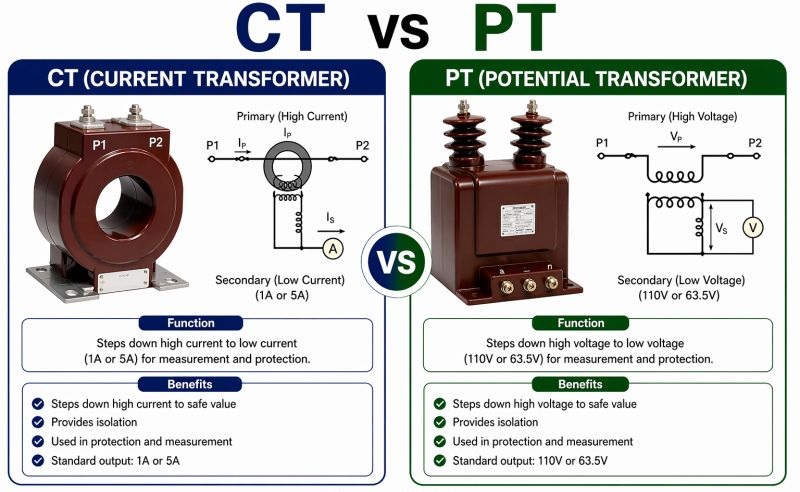
في أنظمة الطاقة الكهربائية، CT (محول التيار) و PT (محول الإمكانات) هي أدوات أساسية تستخدم للقياس الآمن والحماية.
⚡ ما هو محول التيار (CT)?
يقلل CT من التيار العالي إلى قيمة أقل وآمنة (عادة 1A أو 5A) بحيث يمكن قياسه بواسطة الأدوات. هو دائما متصل في سلسلة مع الخط.
✅ فوائد CT:
يضمن قياس التيار الآمن
يوفر عزلة عن خطوط التيار العالية
يحسن دقة نظام الحماية
يستخدم بشكل شائع مع مقاييس الأمبير والريلاي الوقائي
حيث يستخدم CT:
محطات الطاقة والمحطات الفرعية والألواح الصناعية وأنظمة قياس الطاقة.
ملاحظة السلامة الحرجة: لا يجب أبدا أن يكون الجانب الثانوي من CT مفتوح الدوائر بينما يتم تشغيل الجانب الأولي.
⚡ ما هو المحول المحتمل (PT)?
يقلل PT من الجهد العالي إلى قيمة قياسية أقل (مثل 110 فولت أو 63.5 فولت) للقياس والحماية. هو دائما متصل بالتوازي مع الخط.
✅ فوائد PT:
يضمن قياس الجهد الآمن
يوفر عزلة عن خطوط الجهد العالي
يساعد في المراقبة والتحكم الدقيقين
يستخدم مع مقاييس الفولت والريلاي
حيث يستخدم PT:
خطوط النقل والمحطات الفرعية ومحطات التبديل وأنظمة المراقبة.
⚠️ ملاحظة السلامة الحرجة: لا يجب أبدا أن يكون الجانب الثانوي من PT قصير الدوائر.
| ميزة | المحول الحالي (CT) | المحول المحتمل (PT) |
| الاتصال الأساسي | متصل في سلسلة | متصل في موازي |
| وظيفة | خطوات أسفل الحالي | خطوات خفض الجهد |
| القيمة الثانوية | عادة 1A أو 5A | عادة 110V أو 100V |
| الدولة العاملة | بالقرب من الدائرة القصيرة | بالقرب من الدائرة المفتوحة |
| منطقة الخطر | دائرة مفتوحة يسبب الجهد العالي | دائرة قصيرة يسبب ارتفاع التيار |