Introduction
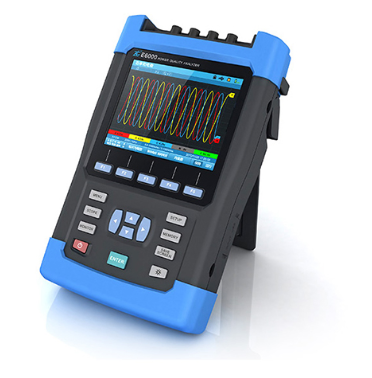
With modern systems increasingly powered by sensitive electronics and non-linear loads—such as rectifiers, frequency converters, and arc furnaces—the risk of power disturbances like harmonics, voltage sags, swells, and imbalances has never been higher. These issues can cause overheating, equipment failure, insulation aging, energy losses, and even resonance-induced damage. A power quality analyzer offers a powerful solution: it continuously samples real-time electrical parameters—voltage, current, harmonics, power factor, transients—and logs high-speed events for analysis. Whether you're troubleshooting elusive disturbances, conducting energy audits, or ensuring compliance with standards like EN 50160 or IEEE 519, this tool sharpens the visibility of your power network. Compact yet robust, it helps protect critical equipment, boost efficiency, and enhance operational resilience.
1. Manufacturing & Industrial Plants
To monitor and tame harmonics, phase imbalances, and transient disruptions that threaten expensive equipment and production uptime.
2. Energy Audits & Efficiency Programs
Essential for pinpointing inefficiencies in motors, lighting, and appliances by measuring losses and power factor issues.
3. Data Centers & Critical Facilities
To detect and eliminate obscure disturbances—like transients or noise—that compromise infrastructure reliability.
4. Energy Utilities & Power Delivery
Used for ensuring grid compliance, tracking disturbance patterns, and supporting smart grid initiatives.
5. Telecommunications & Communication Towers
To prevent interruptions caused by voltage fluctuations or inrush currents that lead to costly downtime.
6. Healthcare & Medical Facilities
Vital for safeguarding life-critical devices such as imaging systems and monitoring equipment.
7. Educational Institutions & Laboratories
For teaching, research, and troubleshooting, helping illustrate power phenomena in controlled environments.
8. Commercial Buildings & Campuses
To maintain smooth operations, analyze energy use, and prevent damage to critical systems.
Real-time monitoring and event capture – Detect rapid transients, sags, swells, and harmonics with precision.
High-fidelity measurements and compliance – Supports harmonics reports and power factor tracking under standards like EN 50160 and IEEE 519.
Portable diagnostic power – Handheld units offer multi-phase sampling, waveform displays, trending, and reporting.
Mystery disturbance detection – Reveals fleeting disruptions not visible with traditional instruments.
A power quality analyzer is not merely an instrument—it is the guardian of electrical integrity in today’s electronics-driven world. Across manufacturing, healthcare, telecom, data centers, and utilities, it delivers the visibility needed to detect, analyze, and resolve disturbances—be they harmonics, voltage anomalies, or transient disruptions. Its capacity for real-time monitoring, compliance verification, and precise diagnostics makes it indispensable for protecting sensitive equipment, enhancing efficiency, and avoiding costly failures. By integrating preventive monitoring with advanced analytics, the power quality analyzer ensures system reliability, energy efficiency, and resilience. Investing in this tool is investing in the long-term stability and competitiveness of any modern power infrastructure.
Electrical parameters
Voltage
Rms, ava, pk+, pk-, rms-1/2, CF
Frequency
Freq
Current
Rms, ava, pk+, pk-, rms-1/2, CF
Power & energy
P, S, Q, PF, DPF, W
Computation
THD, DC, 1-50 Harm, 1-50 InHarm, 1-35 HiHarm, 1-50 SubHarm
Voltage harmonic
THD, DC, 1-50 Harm, 0-49 InHarm, 1-35 HiHarm, 1-50 SubHarm, KF
Current harmonic
THD, DC, 1-50 Harm
Harmonic power
Ia, Ib, Ic, ΣPtotal, ΣQtotal, ΣStotal, 15 minutes
Fluctuation and flickering
PST, PLT, Fluct, Fluct Max
Unbal
V Pos, A pos, V neg, A neg, V zero, A zero, Unbal
Event log
Voltage swell, voltage sags, DIP, surge current, voltage and current distortion out of limit, odd harmonics containing rate out of limited, unbalanced voltage current out of limit, frequency out of limit, PST out of limit, PLT out of limit, long-term voltage interruption, voltage fluctuation deviation
P, Q, S name
Measurement types
P: Calculate by every 10 cycles
S: Calculated by the effective value of voltage and current
Q: Calculated by the apparent power, active power
Display
Table charts, trend chart
Measuring range/resolution
According to the range of the voltage and current
measuring accuracy
±0.5%
Arms
Measurement mode
Calculated by the square root value of 10 cycle
Display mode
Effective current value of each channel
Measuring range/resolution
Current: according to the current clamps
Option: 5A/50A/100A/500A
Current clamps: 1200A/3000A/6000A (flexible current clamp)
Accuracy
0.1%+accuracy of the current clamps
Frequency
Measurement mode
Calculate by 10 cycles (50Hz) or (60Hz)
Display mode
Measurement by 10 cycles
Nominal frequency/resolution
50.000Hz/0.001Hz or 60.000Hz/0.001Hz
Bandwidth measurement
42.5-57.5Hz or 52.5-67.5Hz
Measurement accuracy
±0.001Hz
Half-wave RMS current/voltage
Measurement mode
Calculate by every 2 cycles. Each cycle, 1/2 cycle made up of a waveform calculation
Measuring range/resolution
Voltage: 120V/0.01V, 230V/0.01V, 400V/0.01V, 1000V/0.01V; Current: according to the current clamps
measurement accuracy
±0.1%
Vrms
Measuring circuit
1P2W/2P3W/3P3W/3P4W
Basic frequency of the measuring circuit
50Hz
Input channels
4 phase voltage, 4 phase current
Measurement range
Voltage measurement range: standard: 120V, 230V, 400V, 1000V, Max 1000V instantaneous voltage
Current measurement range: according to the current clamps, only support the v signal output current clamp
Power factor
Measurement mode
The ratio of average power to apparent power
Display mode
Real-time data showed
Measurement range/resolution
-1.000-1.000/0.001
Measurement accuracy
±1%
Vfund, Afund, Harmonic power
Measurement mode
Meet IEC61000-4-7, Analysis time window is ten cycles
Window points
5120 points
Display mode
Form figure, trend charts, histograms
Number of measurement
1-50 Times
Measurement accuracy
Vfund >1%: Error<1%
Vfund <1%: Error<0.05% Rated Voltage
Afund >3%: Error<1%
Afund <3%: Error<0.05% Current range
InHarm Voltage, InHarm current
Measurement mode
Meet IEC61000-4-7, analysis time window is ten cycles
Window points
5120 points
Display mode
Form figure, trend charts, histograms
Numbers of measurement
1-16 groups
Measurement accuracy
Vfund >1%: Error<1%
Vfund<1%: error<0.05% rated voltage
Afund>3%: error<1%
Afund<3%: error<0.05% current range
HiHarm voltage, HiHarm current
Measurement mode
Meet IEC61000-4-7, Analysis time window is ten cycles
Window points
5120 points every 10 cycles
Display mode
Form figure, trend charts, histograms
Numbers of measurement
1-35 groups
Measurement accuracy
Vfund>1%: error<1%
Vfund<1%: error<0.05% rated voltage
Afund>3%: error<1%
Afund<3%: error<0.05% current range
Voltage subHarm current subHarm
Measurement mode
Meet IEC61000-4-7, analysis time window is ten cycles
Window points
5120 points every 10 cycles
Display mode
Form figure, trend charts, histograms
Numbers of measurement
1-50 groups
Measurement accuracy
Vfund>1%: error<1%
Vfund<1%: Error<0.05% rated voltage
Afund>3%: error<1%
Afund<3%: error<0.05% current range
Voltage/current unbal (pos, neg)
Measurement mode
3P3W or 3P4W, using three phase of fundamental wave components to calculate
Display mode
Form figure, trend charts, histograms
Measurement accuracy
Voltage unbal: ±0.2%
Current unbal: ±0.5%
Voltage fluctuation
Measurement mode
Calculate by the quadratic mean of half wave.
Display mode
Form figure, trend charts
Measurement accuracy
±1%
IEC flickering
Measurement
P short term (Pst), P long term (Plt)
Measurement mode
According to IEC61000-4-15 standard to calculate Pst (10 mins) Plt (2 hours)
Display mode
Form figure, trend charts
Measurement range
0-20
Measurement accuracy
±5%
Surge current
Measurement mode
Half-wave RMS of current is higher than set value and sustain time is 10ms-1min
Display mode
Maximum of the surge current and surge current wave
Measurement accuracy
0.10%
Voltage swell, voltage sags, DIP
Measurement mode
Swell: When half-wave RMS of voltage is higher than set value and sustain time is 10ms-1min, judged as swell.
Sags: When half-wave RMS of voltage is lower than set value and sustain time is 10ms-1min, judged as sags.
DIP: half-wave RMS of voltage is higher than set value and sustain time is 10ms-1min, judged as DIP
Display mode
Swell, sags, DIP wave sustain time, extent and so on.
Measurement accuracy
0.10%
Machinery
Size
263mmx168mmx65mm
Weight
2KG
Power supply
Voltage input
110V-240V
Adapter output
15V, 3A
Battery
Rechargeable nickel metal hydride, 4500mAh
Battery working time
4h
Battery recharging time
5h (environment temperature 25°C)
Power saving facility
LCD backlight brightness is adjustable, standby time is adjustable
Display
Size
112.8x84.6mm
Color
260000 color
Resolutions
640x480
Brightness
Max 350cd/m2 (Typ), brightness is adjustable
Contrast
500:1 (Typ)
Visual angle
70/70/50/70 (Typ.)(CR≥10) (left/right/up/down)
Store
Type
TF card (inbuilt)
Size
8G
Standards
Measurement method
IEC 61000-4-30
Measurement performance
IEC 61000-4-30 A LVL
Flickering
IEC 61000-4-15
Harmonic
IEC 61000-4-7
Safety
Standard
GB 4793.1-2007/IEC 61010-1:2001: "measurement, control and laboratory electrical equipment safety requirements", first part: general requirements.
Security level: CAT III 1000V/CAT IV 600V.
MAX voltage of phase angle input
CAT III 1000V/CAT IV 600V
Environmental conditions
Working environment
0°C to +45°C, humidity below 90rh%
Storing environment
-20°C to +50°C, humidity below 95rh% (non-condensing)
Kingrun Transformer Instrument Co.,Ltd.
More Transformer Testers from Kingrun