As a core piece of equipment in the power system, the safe and stable operation of power transformers directly affects the reliability of the power grid. Winding deformation is a highly concealed potential fault in transformer operation. Maintenance experience with multiple units shows that conventional insulation tests and oil analysis are insufficient to detect such defects, and once they occur, they can easily lead to serious power grid accidents. A thorough analysis of the causes, hazards, and detection and prevention methods of winding deformation is of great significance for ensuring the safety of the power system.
The essence of winding deformation is the irreversible change in size or shape of the winding under the action of electrodynamic or mechanical forces. Transformer windings are made of conductors and are in a relatively stable state during normal operation. However, when a short-circuit fault occurs, the short-circuit current generates an electrodynamic force tens of times greater than the rated current. This electrodynamic force is divided into radial force and axial force. The radial force causes the winding to expand outward or contract inward, while the axial force causes the winding to shift vertically or twist. Furthermore, severe jolting during transportation, collisions and impacts during installation, and prolonged short circuits caused by untimely activation of protection systems can all subject the windings to mechanical stresses exceeding their design limits, ultimately leading to deformation.
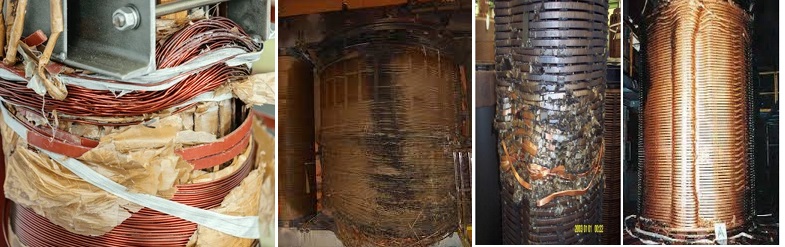
Winding deformation manifests in various forms, primarily including three categories: overall deformation, localized deformation, and inter-turn short circuits. Overall deformation often involves the entire winding shift, bulging, or axial compression; localized deformation is commonly seen in misalignment between winding discs and loose conductors; while inter-turn short circuits are secondary faults resulting from deformation-induced insulation damage. These deformations initially show no obvious visual abnormalities but alter parameters such as the winding's distributed capacitance and inductance, creating potential hazards for subsequent faults.
The consequences of winding deformation are extremely serious. Mild deformation leads to shortened insulation distances, making it prone to partial discharge and accelerated insulation aging during long-term operation; moderate deformation reduces the winding's mechanical strength, making it highly susceptible to complete failure upon subsequent short circuits; severe deformation can directly cause inter-turn or phase-to-phase short circuits, resulting in transformer burnout and even triggering cascading accidents such as fires and widespread power outages. Data from a power grid shows that transformer failures due to undetected winding deformation account for over 35% of all failures, with each incident causing direct economic losses exceeding one million yuan on average.
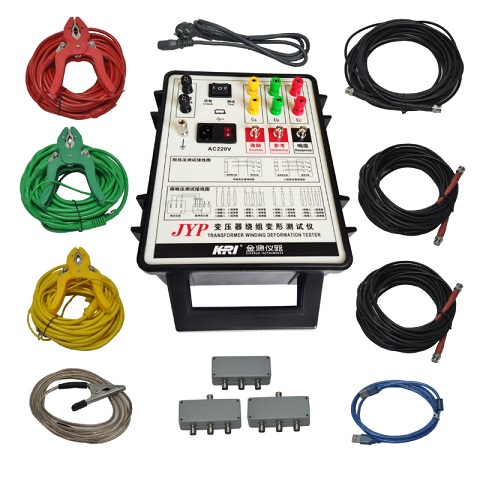
Accurate detection is crucial for controlling winding deformation. Currently, the most widely used method is Frequency Response Analysis (FRA). Its core principle is that the winding can be considered a linear network composed of resistance, inductance, and capacitance. When a sweep frequency signal is input to the winding, a specific amplitude-frequency response curve is generated. After winding deformation, the distributed parameters change, and the response curve shifts accordingly. By comparing the measured curve with standard curves (factory or previous test data) horizontally (different times within the same phase) and vertically (different phases within the same period), the degree and location of deformation can be accurately determined. In addition, the low-voltage short-circuit impedance method is also commonly used for auxiliary detection. By measuring changes in short-circuit impedance, changes in winding geometry are indirectly reflected.
A typical case occurred at a 220kV substation: a 180MVA transformer at the substation experienced a line short-circuit fault. Routine tests showed no abnormalities, but localized overheating occurred during load operation. Maintenance personnel used frequency response analysis to detect a 15% deviation in the response curve of phase A winding from historical data in the mid-to-high frequency range. Combined with short-circuit impedance test data, this indicated slight bulging deformation in the winding. Upon disassembly and verification, it was found that the inter-bend support bars of this phase winding were loose, and the conductors had partially shifted. Timely reinforcement was performed, and the equipment returned to normal operation, preventing the fault from escalating.
Preventing winding deformation requires addressing the issue at its source and establishing a full lifecycle management system. During manufacturing, the winding structure design should be optimized, using high-strength insulation materials and high-quality conductors to enhance the winding's mechanical strength. Proper securing and protection should be implemented during transportation and installation to avoid severe impacts. During operation, enhanced monitoring is necessary, with regular frequency response analysis and short-circuit impedance testing. Specialized testing must be conducted after a short-circuit fault. Simultaneously, comprehensive relay protection devices should be configured to shorten the duration of short-circuit faults and reduce electrodynamic impact.
Although winding deformation is often concealed, its hazards can be effectively reduced through scientific detection methods and comprehensive prevention and control measures. Power operation and maintenance departments should pay attention to such hidden faults, establish a routine detection mechanism, continuously optimize prevention and control technologies, build a solid defense for the safe operation of transformers, and ensure a stable and reliable power supply to the power system.

Other Related Articles:
The Most Complete Transformer Vector Group Collection with Winding Connection Diagrams
How Important is Transformer DC Winding Resistance?
Top 6 Transformer winding resistance testers Worldwide (Including Prices)
How should Winding Resistance be Tested Differently on CT and PT?
What is the Difference between DC Resistance and Insulation Resistance and How to Test Them?
8 Tips to Improve the Accuracy of DC Resistance Measurement
Why is the Tested Winding Resistance Always Inaccurate? You May Have Overlooked These 6 Key Points
Kingrun Transformer Instrument Co.,Ltd.

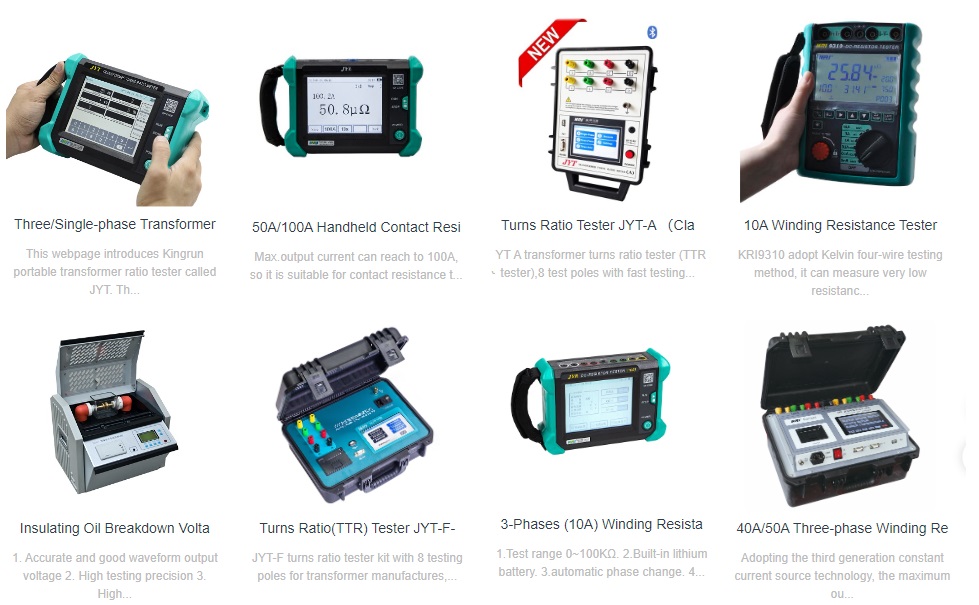
More Transformer Testers from Kingrun