Transformer turns ratio tester (TTR) is a core precision instrument for power system operation and maintenance, as well as transformer manufacturing.When selecting a reliable and stable Turn Ratio Tester, users are often confused by product images and promotional materials on various e-commerce platforms.
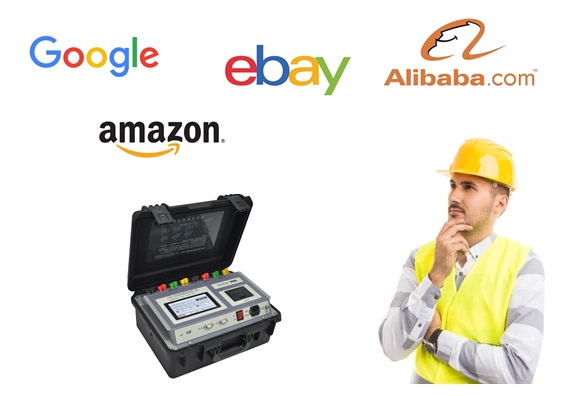
The price of such equipment varies widely, ranging from a few hundred US dollars to tens of thousands of US dollars.Common procurement channels include Amazon, eBay, TikTok, Alibaba, and Google organic search.Which procurement channel is the most reliable?How should buyers strike a reasonable balance between cost and performance?
Reliability Criteria: Vendor credentials, quality control, after-sales protection, and accuracy verification. (Based on 2025-2026 industry research).
Amazon’s traffic is highly targeted toward corporate and professional buyers. TTR prices here typically range from $2,000 to $12,000, aligning with industry standards for professional equipment.
Pros: Strict vendor vetting (business sellers only); requires business licenses, third-party testing, and TTR calibration reports. High barrier to entry filters out inferior products. Excellent after-sales service with 1–3 year warranties and fast dispute resolution.
Cons: Prices carry a 15%–25% premium. Limited selection for niche or highly specialized models.
Primarily serves individuals and small businesses. TTR prices range from $1,000 to $8,000, often 10%–15% lower than Amazon for similar models.
Pros: Large inventory of second-hand units; suitable for emergency use or tight budgets.
Cons: Loose vetting (both individuals and businesses can sell). Units in the low-price bracket ($1,000–$2,000) are frequently refurbished or inferior products using second-hand components labeled as "New." After-sales support is generally weak.
Industrial instrumentation has extremely low exposure here (less than 1% conversion). Prices are erratic.
Pros: None for professional procurement.
Cons: 68% of products are low-priced ($500–$2,000) from unlicensed small workshops. These often use second-hand components, and accuracy cannot be guaranteed. Lack of after-sales standards makes dispute resolution difficult.
Despite being a giant, the platform has significant structural drawbacks for precision instruments.
Pros: Apparent price advantage for bulk orders ($800–$8,000).
Cons: Entry requirements are low (only a business license is required). Bidding-based rankings prioritize advertising spend over product quality, leading to "race-to-the-bottom" pricing where manufacturers cut costs by reducing component quality. Reviews are often inflated by seller incentives.
While Google is a search engine rather than a marketplace, its organic rankings are the most reliable tool for vetting. Rankings are determined by authority, credential transparency, and long-term customer trust.
Why it works: High-quality vendors on Amazon, eBay, and Alibaba all use Google to drive traffic. A TTR supplier ranking high organically usually possesses comprehensive certifications (Calibration reports, ISO, etc.) and a solid reputation.
Pro Tip: Search for TTR keywords on Google. Prioritize vendors with official websites and verifiable third-party testing. Once vetted, you can then transition to their platform store (Amazon/Alibaba) to finalize the purchase with dual protection.
Price differences reflect the inherent value of the hardware:
High-End ($8,000–$12,000): Superior accuracy, premium shielding, and durable materials.
Standard ($2,000–$4,000): Meets basic industrial and regulatory requirements.
The Trap (Below $1,500): Often utilizes recycled or second-hand electronic components disguised as new. The measurement error often exceeds industry standards, rendering them useless—or even dangerous—for industrial applications, because the cost of just the high-performance main processor, FPGA plus high-speed multi-channel synchronous ADC system, high-precision isolated sampling module, and three-phase precision DDS signal source, among other components, is close to 1,000 US dollars.
1. For Enterprise/Bulk Sourcing: Use Google Organic Search to identify reputable manufacturers first. Compare their Amazon or Alibaba storefronts, but remain skeptical of Alibaba vendors who rely solely on paid rankings or exaggerated reviews.
2. For Single/Professional Use: Amazon is the safest bet. If the budget is tight, use Google to find verified "Business Sellers" on eBay, but avoid the "ultra-low-price" tier.
3. For Emergency Use: High-quality used units from eBay are acceptable. Avoid TikTok for any professional testing needs.
Core Conclusion:
Google Organic Search is the best filter for reliability. Among platforms, Amazon offers the highest peace of mind. When using Alibaba, beware of bidding-driven rankings. Always verify vendor credentials, instrument accuracy, and after-sales terms to ensure a secure procurement.
Kingrun Transformer Instrument Co.,Ltd.