Transformers are often operated beyond their nameplate ratings due to planned or emergency situations. While short-term overloads are permissible, each type of overloading scenario has distinct thermal and aging implications for the transformer's insulation system. This document outlines different overloading types, their thermal effects, and strategies for life expectancy and risk management.
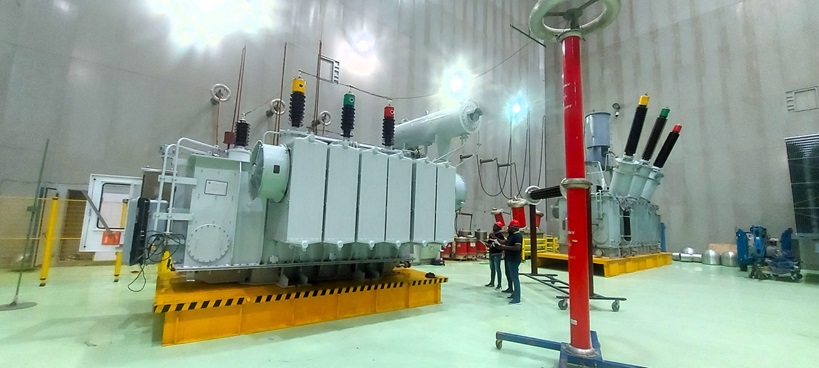
Design Basis: Transformers are designed for continuous operation with a hot-spot temperature of 110°C, in accordance with IEEE Std C57.91 and IEC 60076-7.
Aging Model: At 110°C, insulation aging is considered normal (aging acceleration factor = 1.0), providing a 20.5-year equivalent life for cellulose insulation.
Allowable Variations: Short excursions up to 120°C are acceptable, provided they are occasional and limited in duration (less than 2 hours).
Use Case: During forecasted load peaks (e.g., summer air conditioning demand), planned overloading may be applied.
Typical Duration: 4 to 24 hours, not exceeding daily peak periods.
Hot-spot Range: 120°C–130°C.
Aging Acceleration: At 130°C, the insulation aging factor increases to about 8, meaning 1 day of overload equals 8 days of normal aging.
Mitigation Strategy:
Advanced thermal modeling.
Load tap changers to balance voltage.
Monitoring ambient conditions.
Cumulative Aging: Every overload contributes to loss of life (LOL), which can be estimated using the Arrhenius equation or IEEE/IEC loading guides.
Example: A transformer overloaded for 6 hours at 130°C experiences roughly the same insulation aging as 2 days at 110°C.
Asset Management: Utilities typically accept 5–10% loss of insulation life per year in exchange for operational flexibility.
Trigger Events: Grid contingencies, transmission line failures, or substation outages.
Duration: From several days to 2–3 months, depending on repair logistics.
Hot-spot Range: 120°C–140°C.
Aging Impact: At 140°C, the aging acceleration factor can exceed 20.
Risk:
Increased probability of moisture migration and pressboard delamination.
Internal pressure rises, affecting tank integrity.
Risk of bubble formation and partial discharge.
Top-Oil Temperatures may exceed 105°C, approaching the limit set by IEC 60076-2.
Occurs 2–4 times during a transformer's 30–40 year lifespan.
Requires immediate thermal modeling and post-event inspections (DGA, winding resistance, IR scans).
Tools Used:
Real-time temperature sensors (fiber optic or thermocouples).
Dissolved Gas Analysis (DGA) for early detection of paper insulation decomposition (CO, CO₂).
Thermal modeling software (e.g., IEEE C57.91 Annex G or dynamic loading simulations).
Predictive Maintenance: Enables utilities to balance aging with reliability by adjusting future load profiles.
Use Case: Instantaneous grid support, like during peak failure or black-start recovery.
Duration: Less than 30 minutes.
Hot-spot Range: Can reach 160°C–180°C.
Thermal Danger: Above 150°C, moisture in insulation may vaporize, forming gas bubbles that cause dielectric breakdown.
High Probability of Catastrophic Failure:
Breakdown strength of oil drops sharply due to gas bubbles.
Dielectric margin reduces.
Comparative Risk:
One 15-minute spike at 180°C may cause more insulation damage than 5 days at 130°C.
Mitigation:
Limiting high-risk overloads to 1–2 events per transformer lifetime.
Using online diagnostics to ensure post-event health.
| Overload Type | Frequency in Lifetime | Hot-Spot Temp (°C) | Duration | Failure Risk |
|---|---|---|---|---|
| Normal Loading | Continuous | ≤110 | 30+ years | Low |
| Planned Overloading | Frequent (Annual) | 120–130 | Hours | Moderate |
| Emergency Overloading | 2–4 times | 130–140 | Days to Months | High |
| Short-Time Overloading | 1–2 times | 160–180 | Minutes (<30 min) | Very High |
Custom Thermal Models must be applied for:
Real-time estimation of loss of life (LOL%).
Evaluating cooling class transitions (ONAN → ONAF → OFAF).
Managing dynamic loading cycles.
Asset Management Tools:
Use of IEC 60076-7 Dynamic Loading Guide.
AI-based predictive models integrating ambient temperature, load profiles, and transformer health data.
While transformers are designed with some margin above nameplate ratings, exceeding these limits must be managed with precise thermal modeling, online monitoring, and insulation aging analysis. By quantifying and controlling overload risks, utilities can achieve high reliability without premature transformer failure.
Kingrun Transformer Instrument Co.,Ltd.
More Transformer Testers from Kingrun