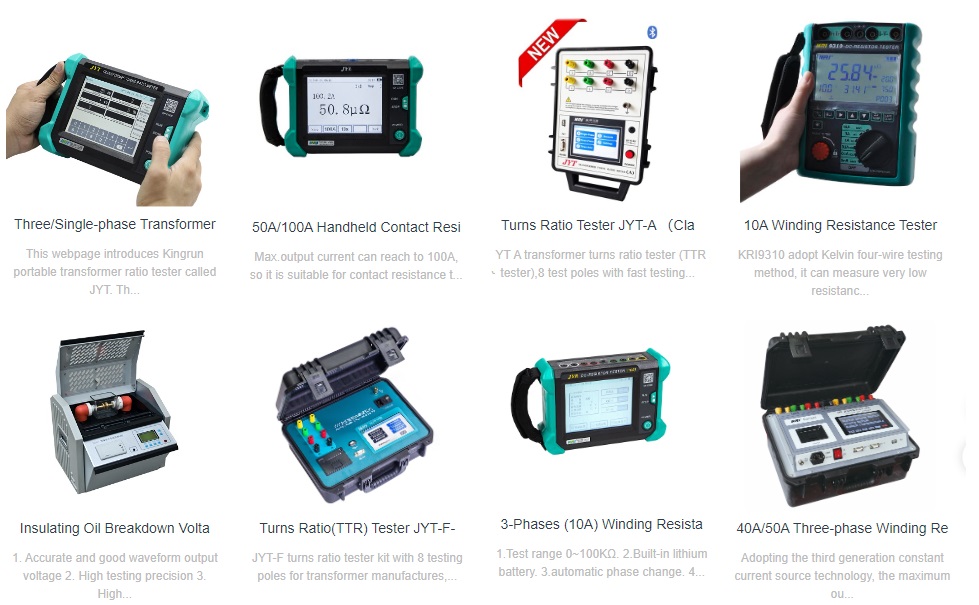
Power Factor testing is a non-destructive and highly accurate technique for assessing the condition of the insulation system in power transformers.
Why measure Power Factor of Transformer?
Over time, insulation can age, absorb moisture, or even become contaminated—all without apparent visual signs. The test allows you to detect these problems before they lead to catastrophic failures.
Interpretation of results:
< 0.5% – Insulation in good condition
0.5–0.7% – Slight deterioration/expected
0.7–1.0% – Warning: requires detailed analysis
> 1.0% – Critical deterioration. Immediate intervention!
• Practical Application – Validation of a 2,000kVA/13.8kV Transformer in Continuous Operation:
During a preventive shutdown at a plant, a Power Factor test was performed on a 2,000kVA/13.8kV transformer to assess the insulation condition, even with no history of failures.
Result: All values were below 0.5%, confirming the excellent insulation condition.
This measurement is now part of the equipment's technical baseline, serving as a reference for future comparisons.
How to Test Power Factor of Transformer?
In transformer power factor testing, the test frequency is typically set to the power system frequency (50 Hz or 60 Hz) to ensure results accurately reflect real-world operating conditions. The primary parameters measured are the dissipation factor (tanδ) and the power factor (PF), which are nearly equivalent when PF is less than 10%, i.e., PF ≈ tanδ.
For single-phase testing, three common connection methods are used:
CH (Capacitance to H-ground): Measures the power factor between the winding and ground, suitable for assessing insulation between the winding and the tank.
CL (Capacitance to L-terminal): Evaluates the inter-turn insulation within a winding.
CHL: Measures insulation between windings, such as between the high-voltage (HV) and low-voltage (LV) windings.
For three-phase transformers, each phase is typically tested separately by connecting the A, B, and C phases individually to the tester. During testing, the non-tested phases should be shorted together and grounded to eliminate stray voltages and improve accuracy. Alternatively, three-phase power factor test sets can be used for simultaneous testing, especially on GIS equipment or large-capacity power transformers, providing higher efficiency and data consistency. Regardless of the method used, proper selection of the test configuration based on transformer design and test objectives is essential to accurately assess the health of the insulation system.
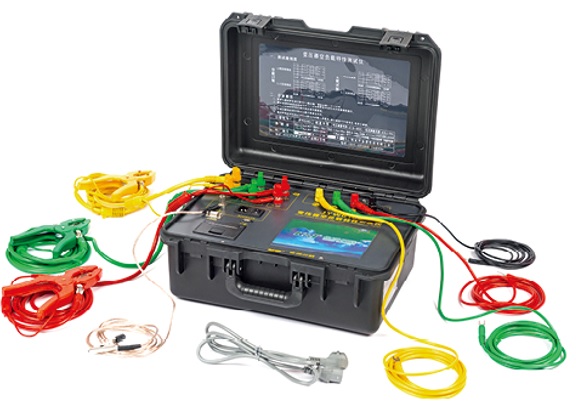
Kingrun Transformer Instrument Co.,Ltd.


More Transformer Testers from Kingrun