Power System Test: Transformer Turns Ratio (TTR) Test
One of the most important tests during transformer commissioning and maintenance is the Turns Ratio Test (TTR).
This test confirms that the transformer is doing its primary job correctly — transforming voltage at the correct ratio.
What the TTR test is:
The Turns Ratio Test checks whether the actual voltage ratio between HV and LV windings matches the nameplate ratio of the transformer.
Simply put:
If the ratio is wrong, the transformer is not healthy.
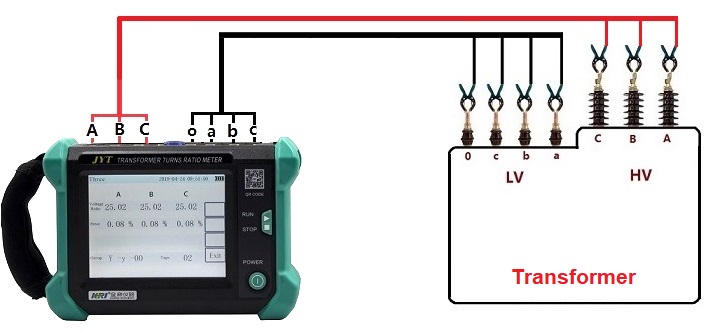
How the test is carried out:
1️⃣ Isolate and de-energise the transformer
2️⃣ Ensure tap changer position is known and recorded
3️⃣ Connect the TTR test set to HV and LV terminals
4️⃣ Inject a low test voltage on one side (usually LV)
5️⃣ Measure the induced voltage on the other side
6️⃣ Repeat the test for all phases and all tap positions
The test is non-destructive and safe when done correctly.
How results are analysed:
✔ Measured ratio should match the nameplate ratio
✔ Typical acceptable deviation: ±0.5%
✔ Phase-to-phase ratios should be consistent
Abnormal results may indicate⚠️ :
Shorted or open turns
Tap changer problems
Incorrect winding connections
Manufacturing or installation defects
Any deviation beyond limits requires investigation before energising.
When the test is performed:
• Before commissioning
• After transportation
• After tap changer maintenance
• During routine condition assessment
Key takeaway:
A transformer may look perfectly fine externally, but a wrong turns ratio can cause severe voltage imbalance, overheating, and system failure.
Testing ensures the transformer delivers exactly what the power system expects.
Kingrun Transformer Instrument Co.,Ltd.



More Transformer Testers from Kingrun