In power work, staff often encounter the problem of measuring the dielectric loss of the transformer, so how to measure the dielectric loss of the transformer? We can use a JYC dielectric loss Tan Delta Tester to measure the dielectric loss of transformers.
First of all, we can understand that dielectric loss is dielectric under the action of electric field, because of internal heating, will convert electrical energy into heat energy consumption, this part of the consumed energy is called dielectric loss. Dielectric loss not only consumes electric energy, but also makes equipment components heat up and affect its normal operation, if the dielectric loss is large, it will cause the dielectric to overheat, resulting in insulation is destroyed, so the dielectric loss is the smaller the better. This is also one of the important quality standards for dielectrics in alternating electric fields.
Specifically, we will talk about how to use a dielectric loss Tan Delta Tester to measure dielectric loss in transformers. After we start the instrument for measurement, the high voltage setting value is sent to the frequency conversion power supply, and the frequency conversion power supply uses the PID algorithm to slowly adjust the output to the value to be set, and then the measured circuit will send the measured high voltage to the frequency conversion power supply, and then fine-tune the low voltage to achieve accurate high voltage output. In this way, according to the setting of the forward/reverse wiring, the instrument will intelligently test the current according to the measurement circuit, intelligently and automatically select the input, and switch the range. In the power transformer high-voltage winding to low-voltage winding, as well as the dielectric loss of the shell, we use the reverse connection method measurement, after the instrument and the power transformer are connected correctly, we choose abnormal frequency, 10kV voltage measurement, reverse wiring method, is when the low-voltage measuring end or secondary end of the test product can not be insulated to the ground, directly grounded, this method is adopted. The instrument adopts the Fourier transform to filter interference and separate several waves of the signal, so as to perform vector operations on the standard current and sample current, calculate the capacitance of the amplitude, and calculate tgδ for the angle difference. After multiple measurements, sort to select an intermediate result. After the measurement, the measurement circuit will issue an automatic step-down command, at which time, the inverter power supply will slowly step down to 0.
The above is how to measure the dielectric loss of the transformer? There is a concrete solution to this problem. The dielectric loss tester can not only measure the dielectric loss of the transformer, but also measure the dielectric loss of transformers, capacitors, bushings, arresters and other equipment. It has the advantages of strong anti-interference ability, fast test speed, high test accuracy, intelligent automatic measurement, and is a good helper for power workers to measure dielectric loss of electrical equipment such as transformers!
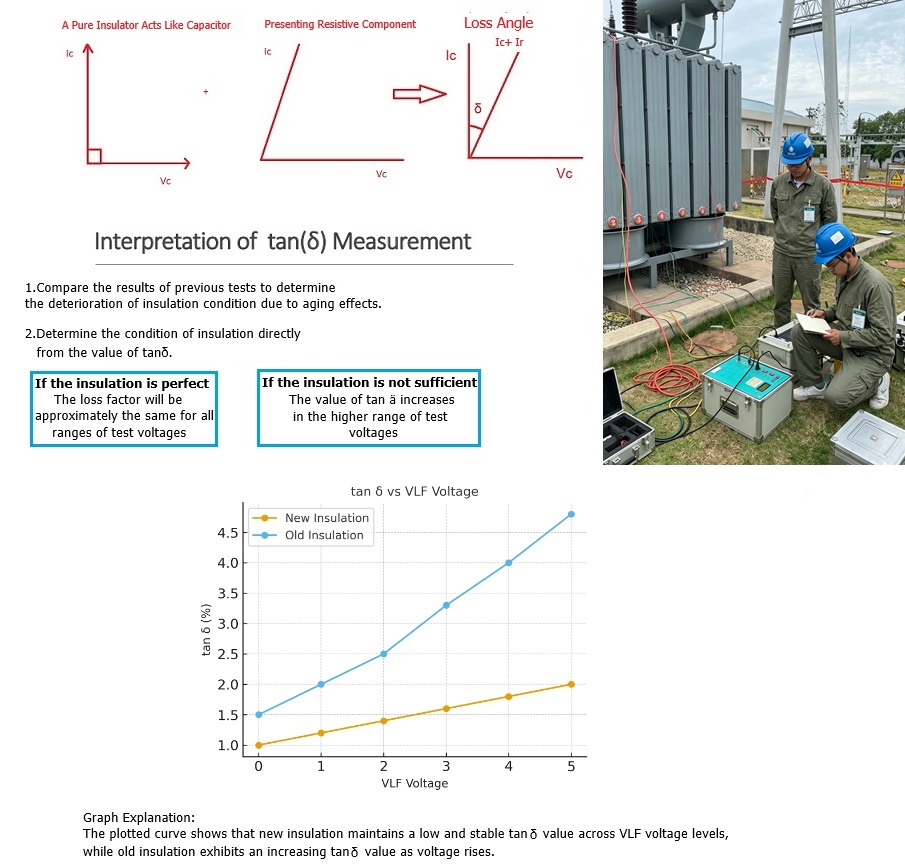
When it comes to tan delta test, there are essentially three modes of power factor testing. Those are:
GST Guard – This calculates the amount of current leakage to the ground. This method eliminates the current leakage through red or blue leads. Whereas in UST, the ground is termed to be guard because grounded edges are not calculated. When the UST method is applied on the device, then the current measurement is only through blue or red leads. The current flow through ground lead gets automatically bypassed to the AC source and thus excluded from the calculation.
UST – This is employed for the calculation of insulation in between ungrounded leads of the equipment. Here the individual portion of isolation has to be separated and analyze it having no other insulation connected to it.
GST – In this final mode of operation, both the leakage pathways are calculated by the test apparatus. The current, capacitance values, UST, and GST guards, loss in watts need to be equal to the GST test parameters. This provides the entire behavior of the test.When the summing value of GST Guard and UST is not equal to the GST parameters, then it can be known that there is some crashing in the test set, or might the test terminal are not correctly designed.
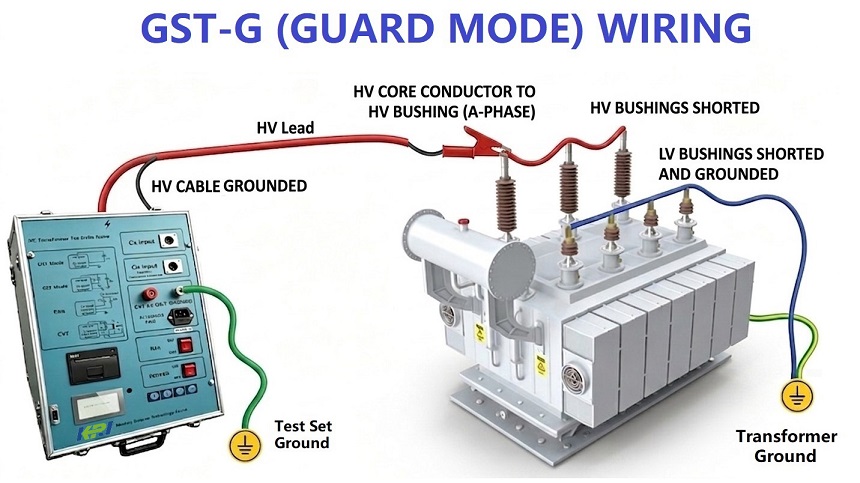
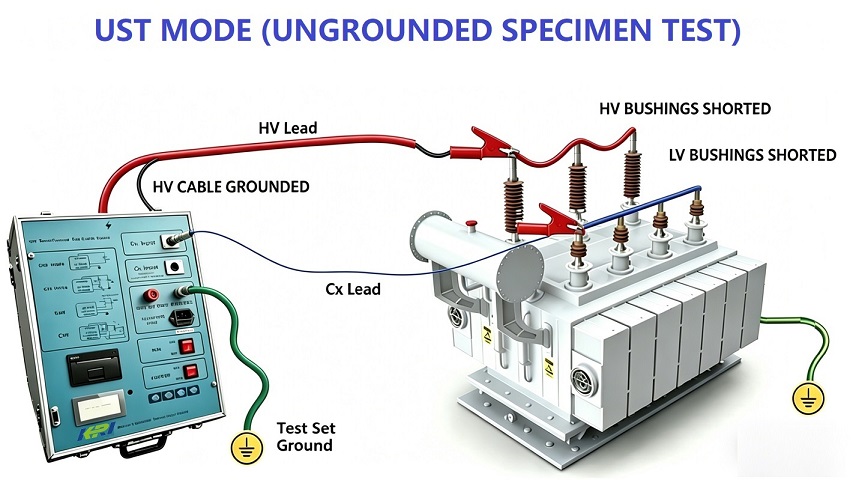
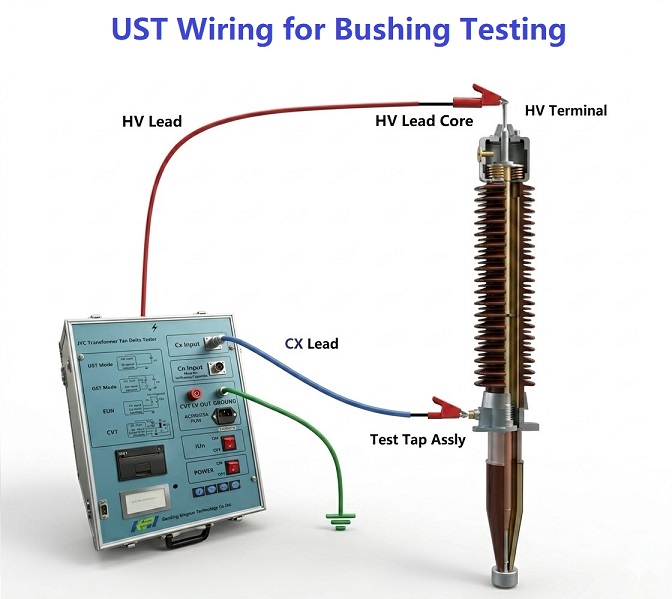
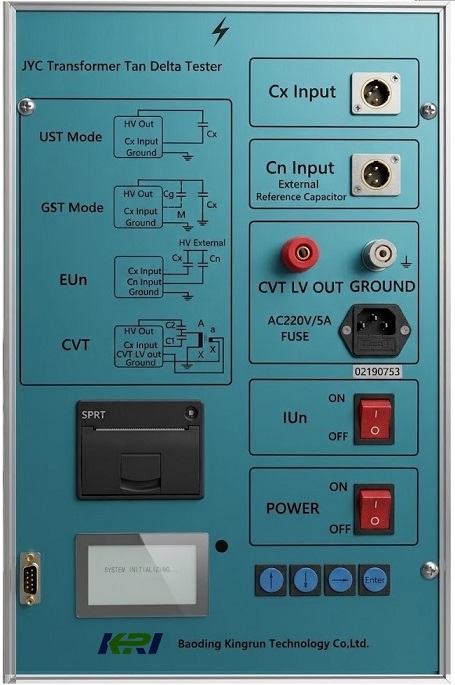
Transformer Tan Delta Tester (JYC)

No, it is not safe to perform on energized equipment. The equipment being tested should be properly de-energized and grounded to ensure the safety of the testing personnel.
Kingrun Transformer Instrument Co.,Ltd.

More Transformer Testers from Kingrun