The % impedance of a transformer, also known as the impedance voltage, is the percentage of rated voltage required to circulate rated current when one winding of the transformer is short-circuited and the other is supplied at rated frequency.
It is determined by a short-circuit test in the factory:
The low-voltage winding is short-circuited.
A gradually increasing voltage is applied to the high-voltage winding until rated current flows.
The supply voltage at this point, expressed as a percentage of the rated winding voltage, is the transformer’s % impedance.
Example:
If a transformer has a nameplate impedance of 8%, and its high-voltage winding is rated at 220 kV, then
is required to circulate rated full-load current with the low-voltage winding shorted.
Engineering significance of % impedance:
It determines the short-circuit current:

→ For an 8% impedance, the short-circuit current is about 12.5 times rated current.
It affects voltage regulation: higher impedance leads to larger voltage drops under load.
It is critical for parallel operation: transformers operating in parallel must have similar % impedances to ensure proper load sharing.
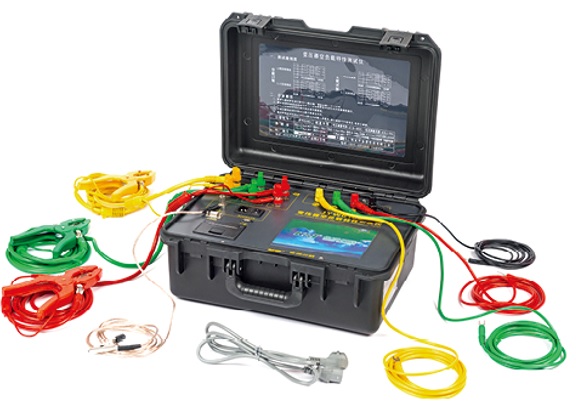
Kingrun Transformer Instrument Co.,Ltd.



More Transformer Testers from Kingrun