In power systems, transformers are critical components whose reliability directly affects the overall stability of the grid. DC winding resistance testing is one of the most effective diagnostic methods for assessing transformer health. It can reveal potential issues such as poor welding, contact defects, and conductor aging within the windings. However, the objectives, testing conditions, and interpretation of results differ significantly between new and aged transformers. Understanding these distinctions ensures accurate diagnostics and enables condition-based maintenance for reliable power transmission.
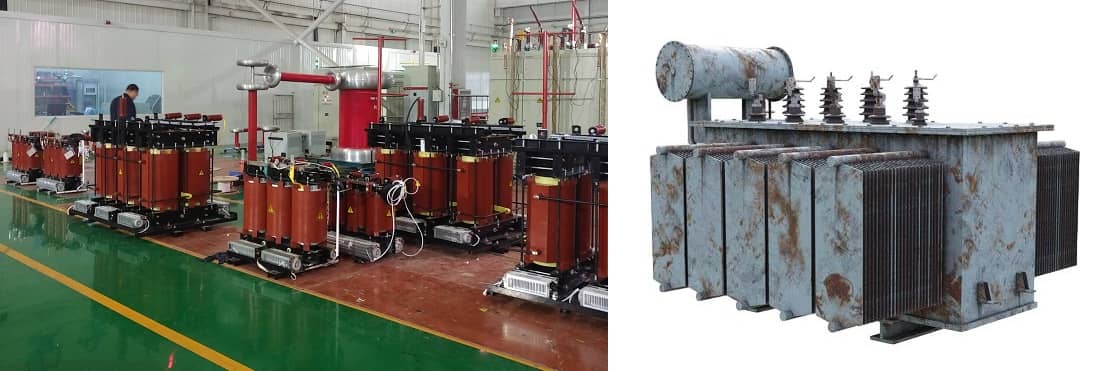
New and aged transformers serve different testing purposes.
For new transformers, the primary goal of DC resistance testing is quality verification. The test confirms the integrity of the manufacturing process, including winding soldering, lead connections, and tap changer assembly. Any abnormal resistance indicates potential production defects, ensuring that only qualified transformers are put into operation.
For aged transformers, the purpose shifts to condition assessment. After years of service, thermal cycling, vibration, and electrical stress may cause oxidation, loose joints, or contact wear. Comparing current test results with historical data helps detect deterioration trends and identify early-stage faults such as local overheating or winding deformation.
New transformers are typically tested in controlled factory environments with stable temperature and humidity. Under such conditions, the temperature difference between windings can be kept below 3°C, minimizing environmental interference.
In contrast, aged transformers are usually tested on-site immediately after shutdown, when residual heat and environmental fluctuations may influence readings. Technicians must correct the measured values to a reference temperature (typically 20°C) and consider electromagnetic interference during the process.
Another key difference lies in core magnetization. New transformers have minimal residual magnetism and can be measured directly. However, aged transformers often retain significant residual flux due to prolonged service. Without demagnetization, this residual magnetism may distort the test results. Therefore, reverse DC or AC demagnetization is typically required before testing.
According to IEC 60076, the test current should not be lower than 10% of the rated current, yet it must not cause noticeable temperature rise. For new transformers, the current is typically set between 10%–15% of rated current, allowing faster stabilization and higher accuracy.
For aged transformers, whose insulation may have deteriorated, the current should be reduced to 5%–10% of rated current to prevent overheating or insulation damage. Although this may prolong stabilization time, it ensures safe testing while maintaining acceptable accuracy.
For new transformers, resistance values should vary linearly with tap position, with allowable deviation within ±2%. This tight tolerance reflects manufacturing precision and design consistency.
For aged transformers, evaluation mainly relies on trend comparison. Resistance values are compared against factory records or long-term historical data. A deviation exceeding ±5% suggests possible deterioration, while a deviation above ±10% indicates potential internal faults that require immediate inspection.
New transformers typically exhibit high phase uniformity, with phase-to-phase resistance deviation less than ±1%, indicating consistent conductor quality and reliable manufacturing. This balance ensures symmetrical load currents and minimizes operational losses.
Aged transformers, on the other hand, often show higher phase differences (2–8%), caused by uneven mechanical stress or localized aging. A significant resistance increase in one phase may indicate contact wear or oxidation at the tap changer, requiring further inspection.
A new 1000 kVA S11-M-1000/10 transformer was tested at 20°C with a 10 A current. The high-voltage winding showed a resistance of 0.325 mΩ at the rated tap, with interphase deviation below 1.5%. The nearly perfect linearity verified excellent manufacturing quality and reliable tap changer performance.
In contrast, a 15-year-old 25 MVA S9-25000/110 transformer tested at 25°C with a 15 A current displayed a 7.4% increase in resistance compared with historical data. The A–B phase deviation reached 4.6%, suggesting possible oxidation or loose joints. These findings indicate early-stage degradation, necessitating follow-up diagnostics, including infrared thermography and dissolved gas analysis (DGA), to confirm internal conditions.
By applying appropriate test currents, considering temperature corrections, and interpreting resistance variations over time, engineers can accurately determine transformer condition and extend its service life. As testing technology advances, integrating intelligent diagnostic algorithms and big data trend analysis will make transformer health assessment more precise, predictive, and automated—securing safer and more stable power systems for the future.
Related Articles:
The Most Complete Transformer Vector Group Collection with Winding Connection Diagrams
How Important is Transformer DC Winding Resistance?
Top 6 transformer winding resistance testers Worldwide (Including Prices)
How should Winding Resistance be Tested Differently on CT and PT?
What is the Difference between DC Resistance and Insulation Resistance and How to Test Them?
8 Tips to Improve the Accuracy of DC Resistance Measurement
Why is the Tested Winding Resistance Always Inaccurate? You May Have Overlooked These 6 Key Points
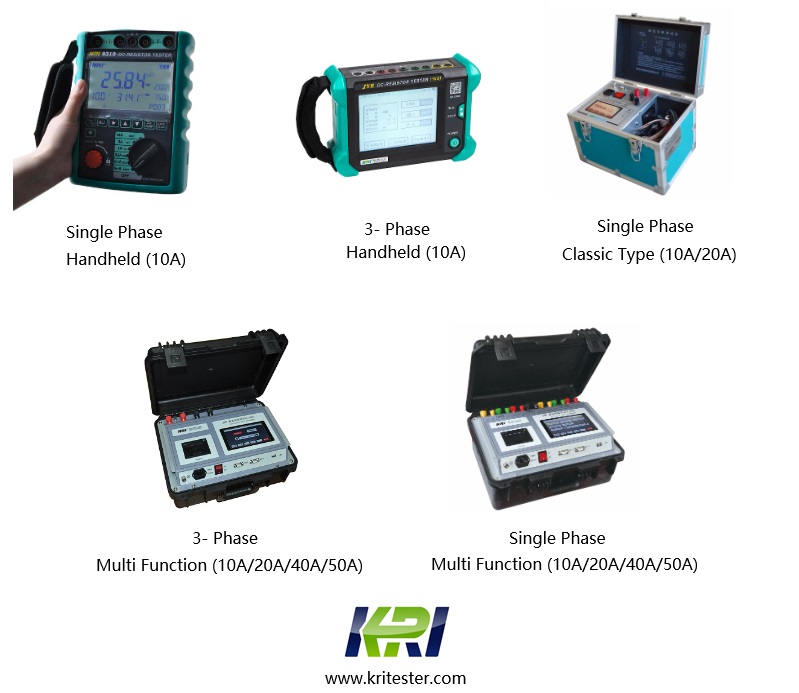
Kingrun Series DC winding resistance testers

Kingrun Transformer Instrument Co.,Ltd.
More Transformer Testers from Kingrun