Transformer Testing Knowledge

All Types of Transformer Tests (3/3): Tan Delta δ;Partial discharge;oil BDV

In our previous installments, we explored the fundamental diagnostics of transformer health, covering everything from open-circuit characteristics to temperature rise limitations. However, as transformers become the backbone of increasingly complex power grids, verifying their structural integrity and insulation purity under extreme stress is paramount.


Part 3 of our series shifts the focus toward high-stakes validation and precision dielectric analysis. We will dive deep into the Short-Circuit Withstand Test, the ultimate verification of a transformer’s mechanical strength against massive electromagnetic forces. Beyond structural resilience, we explore the "silent" indicators of aging and contamination through Tan Delta (Dissipation Factor) and Oil Breakdown Voltage (BDV) testing—essential metrics for monitoring insulation degradation.

Finally, we will examine Partial Discharge (PD) testing, a sophisticated diagnostic capable of detecting microscopic defects before they escalate into catastrophic failures. By mastering these advanced evaluations, engineers can ensure that a transformer doesn't just work upon installation, but remains resilient against the rigors of long-term service.
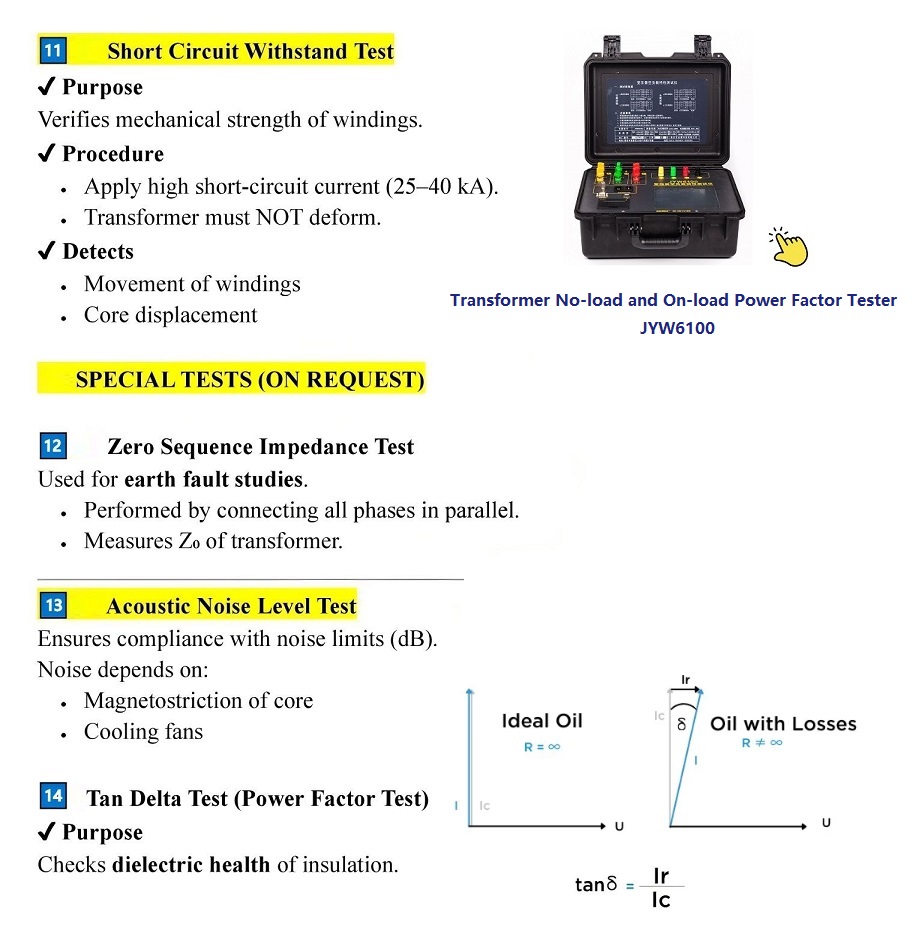
transformer short circuit withstand test, zero sequence impedance test, acoustic noise level test

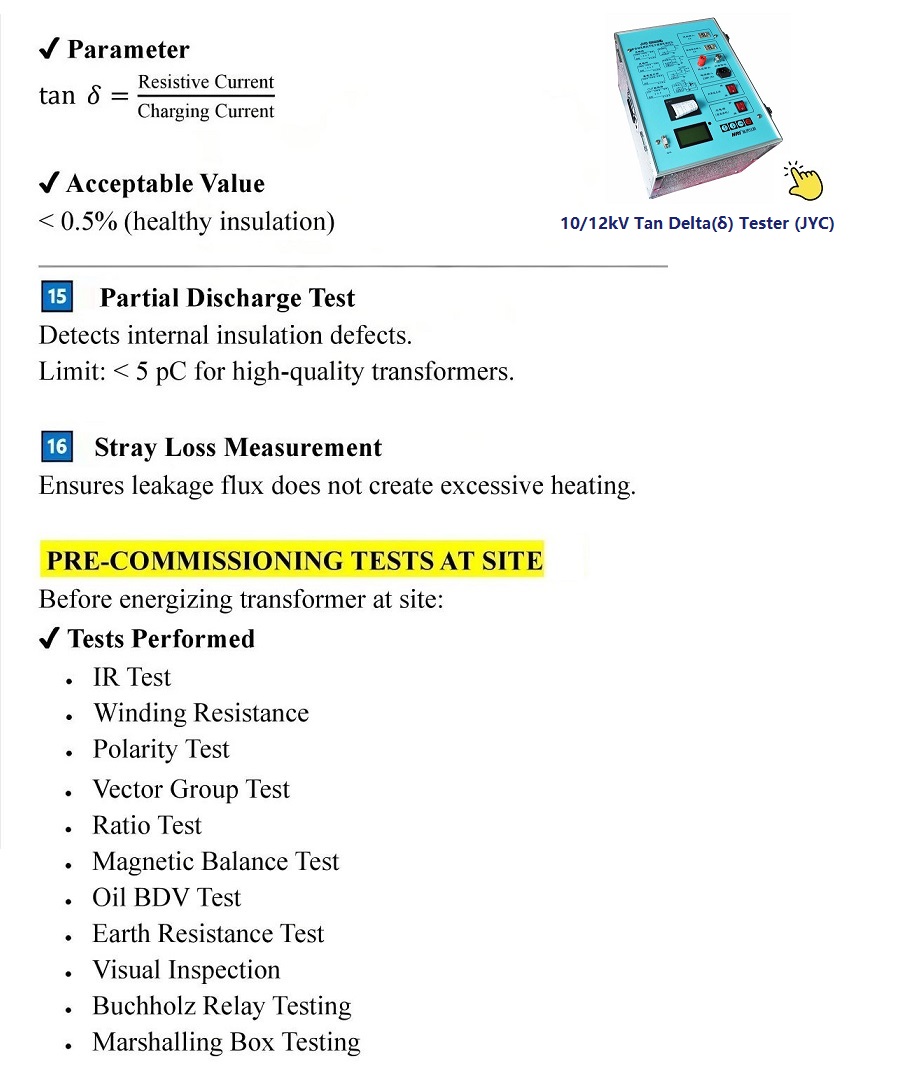
transformer tan delta test, partial discharge test

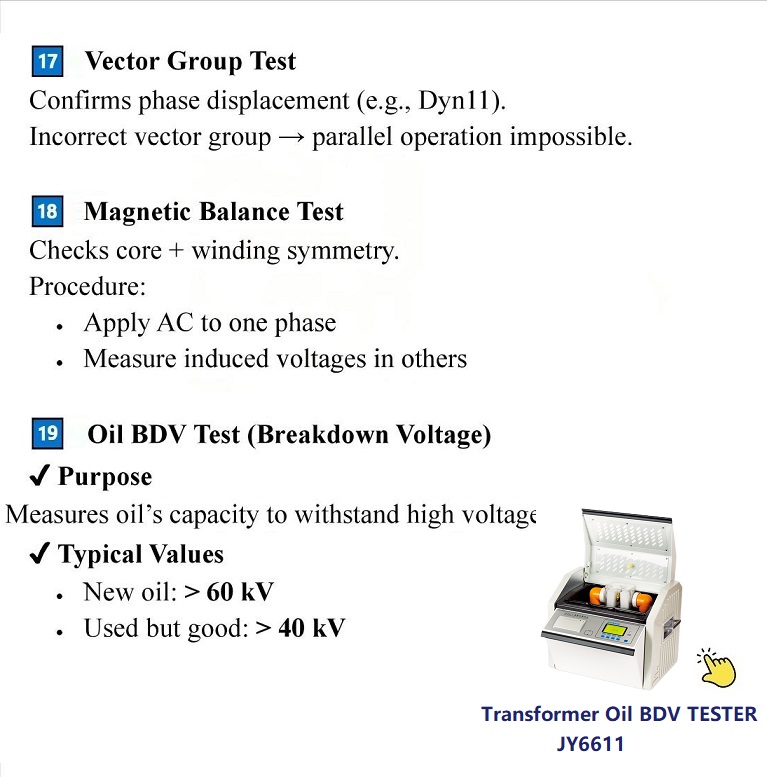
transformer vector group test, magnetic balance test, oil bdv test

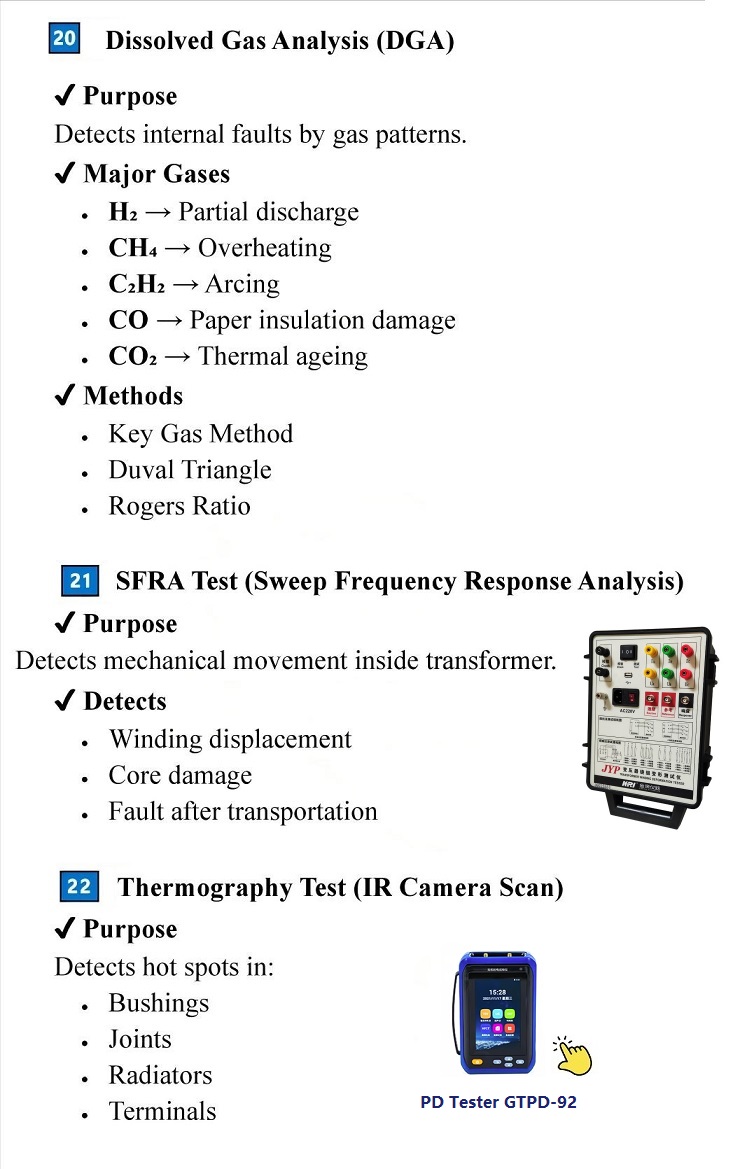
dissolved gas analysis (DGA), sweep frequency response analysis(SFRA)TEST, thermography test(IR Camera scan)