1. Overview of Incidents
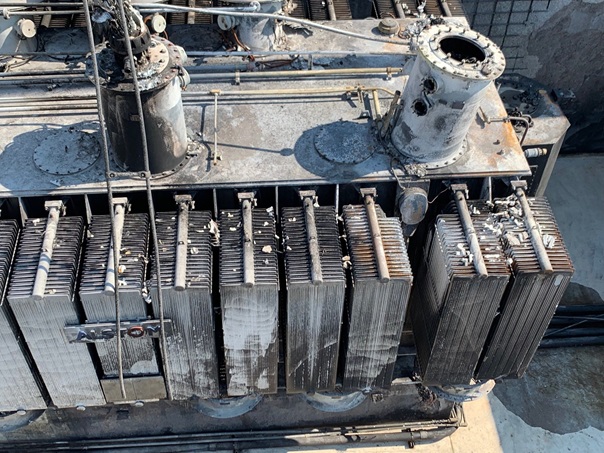
Recently, the failure rate of 110kV transformers has shown a noticeable upward trend worldwide. The failed transformers have an average capacity of 32.4 MVA, higher than the typical operating capacity for this voltage class, with 31.5 MVA units being the most common. Transformers manufactured after 2015 account for 43.5% of incidents, with some in service for less than eight years. External short-circuit current surges caused 35.5% of all incidents (48% for on-load tap-changing transformers), with winding faults being the primary initiating factor.
2. Core Causes of Winding Faults
(a) Electrodynamic Forces from Short-Circuit Currents
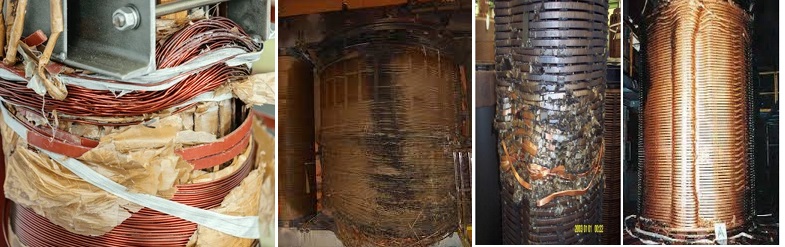
During sudden short-circuits, transformer windings are subjected to both radial and axial forces. Radial forces stretch the outer windings and compress the inner ones; if combined stress exceeds the winding’s yield strength, permanent deformations such as “cloverleaf” or bulging patterns can occur. Axial forces bend conductor segments and compress spacers, with maximum stress at the winding ends and core center. Unequal winding heights or nonuniform magnetomotive force (MMF) distribution increases vulnerability. In some transformers with insufficient dynamic stability, even rapid protection actions cannot prevent deformation from the first short-circuit peak current, which can reach 1.8 times steady-state levels.
(b) Inherent Manufacturing Defects
Axial pressing deficiencies: Some manufacturers use “new structures” without adhering to standard processes. High- and low-voltage windings share insulation clamps without proper densification or controlled-pressure drying, leading to insufficient clamping and potential displacement in operation.
Material and structural limitations: Laminated board clamp strength is often inadequate, with repeated breakages observed during incidents. Weak support between inner windings and core limbs, insufficient or poorly selected spacers, reduce radial dynamic stability.
Quality control lapses: Uneven spacer thickness, locally bent conductors, and improperly fixed leads or supports lower winding mechanical integrity.
(c) Cumulative Effects and Protection Failures
Progressive deformation: Multiple short-circuit events can accumulate winding deformations, causing turns imbalance and increased axial leakage forces, eventually resulting in severe damage. For example, a 110kV transformer in the Philippines experienced significant winding deformation over seven years of repeated short-circuit impacts.
Protection system malfunctions: Approximately 30% of short-circuit-related failures occur due to delayed protection operation, allowing transformers to sustain prolonged short-circuit currents. Wire annealing and inadequate dynamic stability exacerbate damage.
3. Measures to Mitigate Winding Failures
(a) Optimization of Manufacturing and Assembly Processes
Standardize axial pressing: Densify spacers, dry each winding under controlled pressure, and apply oil-hydraulic force during assembly to ensure all windings are properly compressed and remain stable.
Improve structure and materials: Use sufficiently stiff clamp materials, reinforce laminated board design, add spacers between inner windings and core limbs, and adopt high-strength paper tubes for winding frames to improve radial dynamic stability.
Enhance transport positioning: Optimize body positioning during transport to prevent vibration or impacts that could displace windings.
(b) Strengthening Testing and Inspection
Conduct short-circuit tests: Verify mechanical stability, identify weak points, and minimize variability in manufacturing processes.
Promote winding deformation testing: Record short-circuit impacts and calculate current multiples. Use frequency response analysis (FRA) or similar methods to detect deformations and guide targeted inspection or maintenance.
(c) Improvement of Operational Protection Systems
Ensure reliable protection: Provide stable DC power to guarantee accurate and timely tripping, avoiding prolonged short-circuit current exposure.
Optimize reclosing schemes: For nearby overhead lines (<2 km) or cables, consider delaying or canceling automatic reclosing. After a short-circuit trip, perform transformer tests to prevent secondary damage.
Related Articles:
The Most Complete Transformer Vector Group Collection with Winding Connection Diagrams
How Important is Transformer DC Winding Resistance?
Top 6 Transformer winding resistance testers Worldwide (Including Prices)
How should Winding Resistance be Tested Differently on CT and PT?
What is the Difference between DC Resistance and Insulation Resistance and How to Test Them?
8 Tips to Improve the Accuracy of DC Resistance Measurement
Why is the Tested Winding Resistance Always Inaccurate? You May Have Overlooked These 6 Key Points
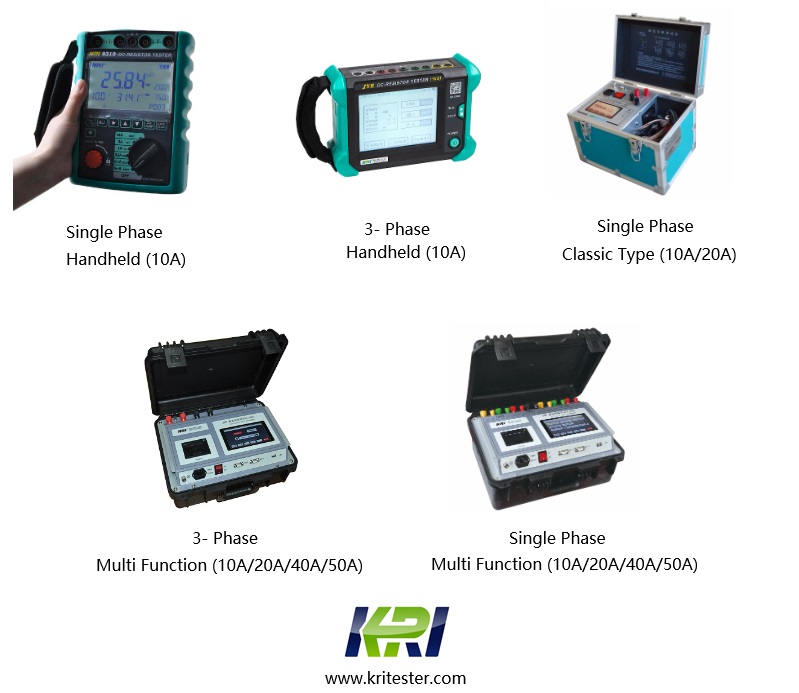
Kingrun Series DC winding resistance testers

Kingrun Transformer Instrument Co.,Ltd.