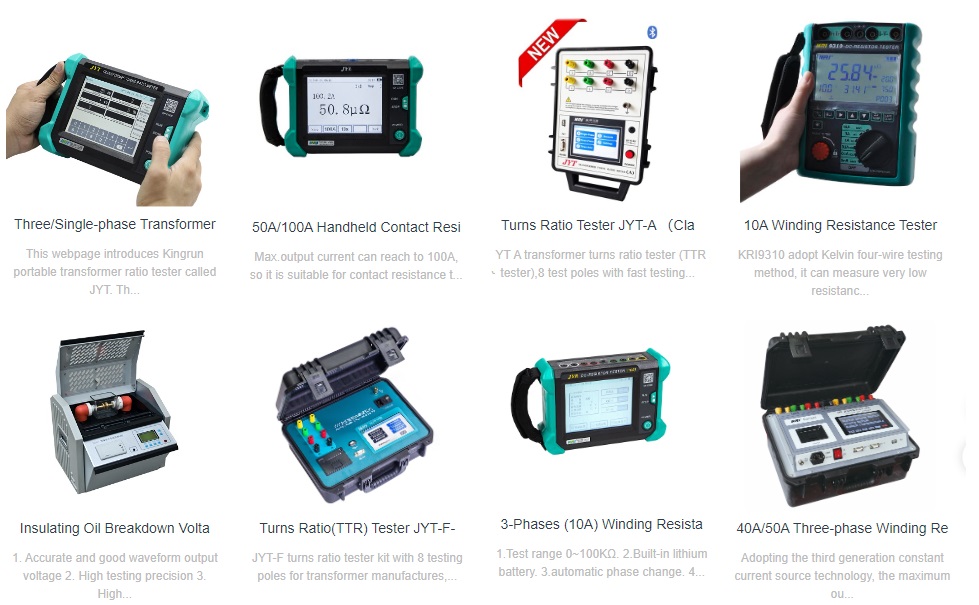
The Circuit Breaker Analyzer (CB Analyzer) is widely used for testing the dynamic characteristics of high-voltage switching equipment. It can perform timing tests, operating characteristic measurements, and switching performance evaluations on devices such as SF₆ gas-insulated switchgear (GIS), vacuum circuit breakers, oil circuit breakers, pole-mounted switches, contactors, and their contacts. This ensures accurate assessment of mechanical operation, synchronization, and overall reliability of the equipment.
The specific test requirements and times are as follows:
1. Measurement time: not less than the circuit breaker closing time, the resolution is 0.01ms;
2. Time measurement error: 0.1ms within 200ms±, ±2% above 200ms;
3. Synchronization time measurement error: the synchronization time of the tester is not more than ±0.1ms;
4. When measuring the closing and opening time of the circuit breaker, the trigger time difference between the closing power supply and the opening power supply should be set:
Opening and closing time S1 = closing time + no current gap time closing time
Closing time S2 = closing time + short opening time of gold
Among them, the opening time and closing time are measured in advance. No current gap and metal short circuit time are provided by the circuit breaker manufacturer, and the setting time should be slightly less than the specified value (if the standard without current gap time is 300ms, it can be set) about 280 ms; If the metal short-circuit time is 60 ms, it can be set to about 50 ms).
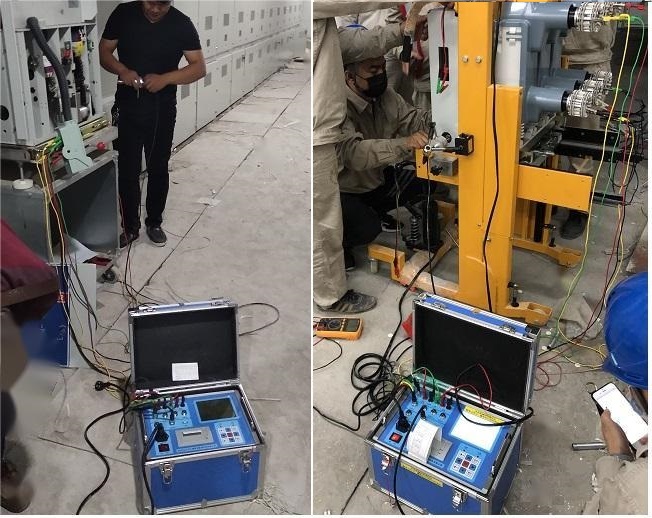
Circuit Breaker dynamic characteristics tester test data analysis and processing
1. The test results should be compared with the values given in the circuit breaker manual, and should meet the requirements of the manufacturer;
2. If there is test data in the test project that does not meet the manufacturer's requirements, first check whether the wiring situation, parameter settings, and instrument conditions meet the test requirements;
3. When the opening time does not meet the requirements of the specification, the possible reasons are: first, the position of the opening electromagnet jackrod and the opening switch is not suitable; The second is tired of opening the spring; Third, the opening distance or overtravel does not meet the requirements. According to the manufacturer's technical requirements, adjust the opening electromagnet, opening and closing spring and mechanism linkage;
4. When the closing time does not meet the requirements of the specification, the possible reasons are: first, the single opening and closing time does not meet the requirements of the specification; Second, the circuit breaker operating mechanism has tripping performance. Comprehensively analyze the above reasons, adjust the single opening and closing time or adjust the release according to the manufacturer's technical requirements;
5. When the values in different periods do not meet the requirements of the specification, the possible reasons are: first, the three-phase opening distance is inconsistent; Second, the electromagnet action time of the splitting mechanism is inconsistent. The above reasons should be comprehensively analyzed, and the opening electromagnet, opening and closing spring, and mechanism connecting rod should be adjusted according to the manufacturer's technical requirements.
Other Related Articles:
Why Does the Contact Resistance Testing Need 100A or Higher?
Hazards and Treatment of Excessive Contact Resistance of Circuit Breakers or HV Switches
How to measure the contact resistance without changing the circuit?
How to Correctly Test the Contact Resistance of HV Switchgear or Circuit Breaker?
Why Does Excessive Contact Resistance Occur In Electrical Secondary Circuits?
What is the Testing Checklist for 110kV/220kV Substation Acceptance and Maintenance Testing?
Kingrun Transformer Instrument Co.,Ltd.



More Transformer Testers from Kingrun